



Quick Definition
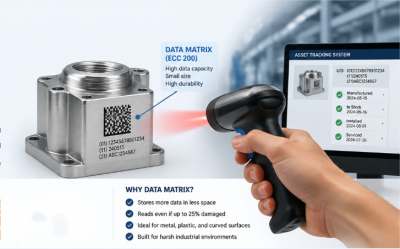
A UID barcode (Unique Identification barcode) is a serialization system that assigns a globally unique identifier to each individual item, enabling precise tracking, lifecycle management, and full traceability across supply chains.
Unlike traditional barcodes that identify product types, a UID barcode ensures every single unit is uniquely distinguishable worldwide.
What Is a UID Barcode?
A UID (Unique Identification) barcode is not just a barcode format—it is a data structure and serialization strategy used to uniquely identify physical assets.
Instead of labeling products by category (like a UPC), UID barcodes encode item-level identity, allowing businesses to track:
● Individual devices
● Specific components
● High-value assets
● Regulated equipment
This system is widely used in industries where precision, compliance, and traceability are critical.
UID Barcode vs Traditional Barcode (Key Differences)
Feature | UID Barcode | Traditional Barcode |
Identification Level | Individual item | Product type / SKU |
Uniqueness | Globally unique | Shared across items |
Data Content | Manufacturer + Part + Serial | Product ID only |
Use Case | Asset tracking, compliance | Retail, inventory |
Traceability | Full lifecycle tracking | Limited |
Key takeaway:A traditional barcode tells you what the product is, while a UID barcode tells you exactly which item it is.
What Data Does a UID Barcode Contain?
A standard UID barcode typically includes three core elements:
1. Enterprise Identifier
Identifies the manufacturer or issuing organization.
2. Part or Model Number
Defines the product type or configuration.
3. Serial Number
A unique code assigned to that specific unit.
Together, these elements create a globally unique identifier, forming the foundation of barcode serialization systems.
Why the Data Matrix is the Standard for UID
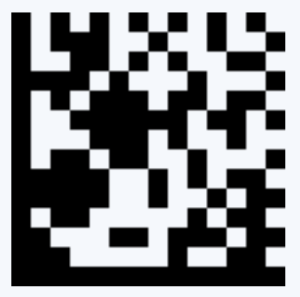
While you can technically use various barcode formats for identification, the Data Matrix ECC 200 has become the gold standard for industrial UID barcodes.
Unlike the traditional "zebra-stripe" 1D barcodes, the Data Matrix is a 2D square symbol. It offers several distinct advantages:
● Space Efficiency: It can store a massive amount of data in a tiny footprint, making it ideal for small electronic parts or surgical tools.
● High Error Correction: Thanks to the ECC 200 standard, these barcodes can often still be read even if 25% of the symbol is scratched or damaged.
● Durability: Data Matrix codes can be etched directly onto metal surfaces via laser marking, ensuring the UID remains readable for decades.
Benefits of UID Barcodes for Asset Tracking
Implementing a UID barcode system is an investment in data integrity. Beyond simple compliance, the benefits to a business are immediate and measurable.
Precision Traceability and Recalls
If a specific component is found to be defective, a UID system allows a company to identify exactly which products contain that part. Instead of a massive, expensive recall of an entire product line, you can perform a "surgical recall" on only the affected units.
Asset Lifecycle Management
For enterprise IT or heavy machinery, a unique identification barcode acts as a ledger. Every time a piece of equipment is serviced, calibrated, or moved, the barcode is scanned. This creates a permanent, unalterable history of the asset's health and location.
Human Error Elimination
Manual data entry is the enemy of efficiency. By using high-resolution UID tags, logistics teams can automate the check-in and check-out process, reducing inventory discrepancies to near-zero levels.
Common Industrial Applications of UID Barcodes
✅️ Healthcare: Hospitals use UID barcodes to track high-value medical devices and implants, ensuring that sterilized equipment is always accounted for and patient safety is maintained.
✅️ Automotive and Electronics: Manufacturers track individual components to monitor quality control and manage complex global supply chains.
✅️ Enterprise IT Infrastructure: Large corporations use asset ID barcodes to manage thousands of laptops, servers, and networking components across multiple global offices.
How to Generate a UID Barcode
To create a professional UID barcode, businesses typically follow these steps:
1. Define UID structure (enterprise + part + serial)
2. Encode data into Data Matrix format
3. Generate high-resolution barcode
4. Apply durable marking (label or laser engraving)
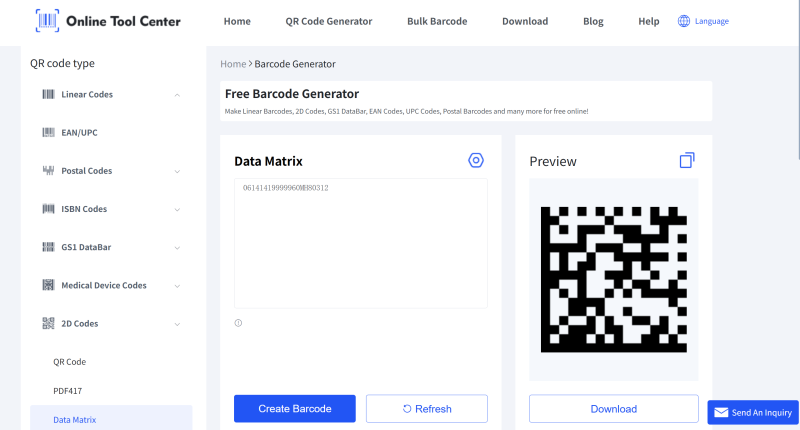
Creating a reliable UID starts with the right tools. Because these codes are often meant to last the life of the product, the barcode quality must be perfect.
Our versatile online barcode generator seamlessly supports a wide array of formats, including the high-density Data Matrix symbols required for industrial-grade serialization.
Key advantages:
✔ 100% Free Access: Generate professional-grade barcodes at no cost, removing financial barriers for businesses of all sizes.
✔ Universal Format Support: Beyond Data Matrix, we support QR codes, Code 128, UPC, and EAN for all your labeling needs.
✔ No Watermarks: Download clean, branding-free images ready for immediate integration into your product packaging.
✔ Vector Mode Exports: Scale your barcodes to any size without losing clarity—perfect for high-resolution printing and laser etching.
Clear, scalable, and easy to integrate—our generator provides the technical foundation your business needs for world-class tracking.
FAQ: Understanding UID Barcodes
Q: Is a UID the same as a serial number?
A: Not exactly. A serial number is a piece of data; a UID is a globally unique identifier that typically includes a serial number along with manufacturer and part data to ensure it is unique worldwide.
Q: Can I use a QR code for a UID?
A: While QR codes can store similar data, the Data Matrix is generally preferred in industrial settings because it is more compact and has superior readability on curved or metallic surfaces.
Q: Do UID barcodes expire?
A: The barcode itself does not expire, but the data it points to should remain in your database for the duration of the item's "useful life" plus any required archival period.
