




If you are hunting for a rare issue, the ability to identify a comic book barcode first print is the difference between finding a "key" and buying a common reprint. While cover art can be deceptive, the barcode—specifically the 5-digit extension—never lies. Whether you are at a local shop or browsing an online auction, this guide will help you decode the print status of any modern comic in seconds.
Quick Guide: How to Identify a Comic Book Barcode First Print
If you're standing in a shop right now and need an answer fast, look at the UPC supplemental 5-digit extension (the smaller barcode next to the main UPC).
The Golden Rule: Look at the very last digit.
If it ends in 1, it's a First Printing.
If it ends in 2, 3, or higher, it's a later printing.
It's that simple. But if you want to understand the "why" behind the numbers—and avoid getting burned on a "key issue"—we need to break down the code.
The Anatomy of a Comic Barcode: Understanding the "12345 Rule"
Modern comics from publishers like Marvel, DC, and Image use a specialized UPC-A system. While the long barcode identifies the series (e.g., The Amazing Spider-Man), the 5-digit supplemental box identifies the specific "identity" of that physical book.
Let's decode an example extension: 00121
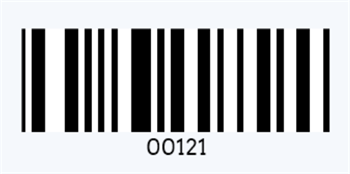
1. Digits 1-3: The Issue Number
The first three digits represent the issue number in the series.
● 001 represents Issue #1
● 025 represents Issue #25
● 700 represents Issue #700
2. Digit 4: The Cover Variant
Publishers love "Variant Covers"—different artwork for the same issue.
● 1 signifies Cover A (the standard or "main" cover).
● 2 signifies Cover B (the first variant).
● 3 signifies Cover C, and so on.
3. Digit 5: The Printing Number
This is the comic book barcode first print identifier collectors obsess over.
● 1 indicates a First Printing.
● 2 indicates a Second Printing (usually released after the first batch sold out).
● 3 indicates a Third Printing.
Scenario: You find a copy of Ultimate Fallout #4 (the first appearance of Miles Morales). If the barcode reads 00411, you have the standard Cover A, First Printing. If it reads 00412, you have a second printing, which may still be valuable but usually commands a different market price.
Why Does "First Print" Status Matter for Value?
In the secondary market, the "True First Appearance" of a character is the gold standard. Professional grading companies like CGC or CBCS use this 5-digit data to categorize books on their blue labels.
Missing a single digit could be a costly mistake. For example, a first print (00111) might sell for hundreds of dollars, while a second print (00112) often drops significantly in value unless it features a unique "ratio variant" cover. This is why resellers and investors prioritize the barcode over the cover art alone.
Pro Tip: Direct Market vs. Newsstand Editions
Collectors should also note the difference between Direct Market (sold in comic shops) and Newsstand editions (sold in grocery stores).
✔ Direct Market barcodes almost always follow the 5-digit rule mentioned above.
✔ Vintage Newsstand copies from the 80s and 90s might only have a standard 10 or 12-digit UPC without the extra extension.
In some eras, Newsstand First Prints are actually rarer than Direct Edition copies because they were more likely to be destroyed or returned to the publisher.
Streamline Your Inventory with a Comic Barcode Generator
If you are an independent creator or a shop owner, labeling your stock correctly is essential for buyer confidence. Using an online barcode generator that supports UPC and 5-digit supplemental codes ensures your comics are cataloged accurately in apps like CLZ or Key Collector.
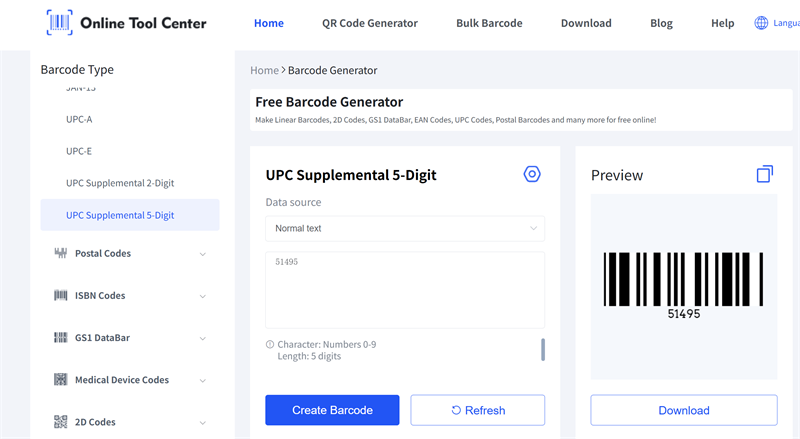
Our tool allows you to generate professional comic book barcode first print labels, including the correct issue, variant, and printing suffixes, ensuring your collection or inventory is industry-standard from day one.

FAQ: Common Barcode Questions
Q1: Can a Cover B still be a First Printing?
A: Absolutely. Check the code: if it ends in 21 (Variant 2, Printing 1), it is the first printing of that specific variant.
Q2: My comic barcode only has 2 digits in the extension. Why?
A: This is common for Trade Paperbacks (TPBs) or Graphic Novels. For single "floppy" issues, the 5-digit standard is the norm.
Q3: Does a barcode affect the grade?
A: Not the physical grade (e.g., 9.8), but it defines the "Label Description," which is the most important factor for price.
