




A DataMatrix 10 x 10 is the smallest ECC 200 DataMatrix symbol, consisting of a 10 x 10 grid used to encode very small amounts of data.
Because of its minimal footprint—often around 1 mm—the DataMatrix 10 x 10 is widely used in industries such as aerospace, electronics, and medical devices, where marking space is extremely limited.
However, this compact size comes with strict limitations. A DataMatrix 10 x 10 can only store a few characters and requires precise control over marking and scanning conditions.
This guide explains its size, capacity limits, and when it is the right choice in real-world applications.
What Is a DataMatrix 10 x 10? (Definition and Practical Meaning)
A DataMatrix 10 x 10 is a 2D barcode composed of 10 rows x 10 columns (100 modules) under the ECC 200 standard.
While it consists of 100 modules, a significant portion of that space is reserved for structural patterns and error correction. This leaves only a minimal area for actual data, which fundamentally defines how the symbol is used in practice.
In other words, the 10 x 10 format exists not for flexibility, but for extreme space constraints.
DataMatrix 10 x 10 Capacity Limits (What You Can Actually Encode)
The single most important constraint is data capacity—and this is where many implementations fail.
Although the symbol contains 100 modules, only a small portion is available for actual data. The rest is reserved for:
• Finder pattern (L-shaped border)
• Timing pattern
• Error correction (Reed–Solomon, roughly 25%)
As a result, the usable payload is extremely limited.
Practical capacity limits:
According to the ECC 200 specification, the maximum capacity of a 10 x 10 DataMatrix is:
• Numeric: 6 digits
• Alphanumeric: 3 characters
• Binary: 1 byte
Key insight:
A 10 x 10 DataMatrix is not "small but flexible." It is strictly limited. Even a single extra character will force the symbol to expand.
For example, attempting to encode “1234567” will automatically generate a 12 x 12 symbol, not 10 x 10.

Physical Size of DataMatrix 10 x 10 (Module Size and Quiet Zone)
Once data is defined, the next constraint is physical size.
The final dimensions depend on the X-dimension (module size). In high-precision marking systems, this can go as low as 0.1 mm.
Typical physical dimensions:
• Matrix size: determined by the module size (X-dimension), not fixed
• Quiet zone: at least 1 module width on each side
• Total required space: depends on module size and includes the quiet zone
For example, with a module size of 0.25 mm, a 10 x 10 DataMatrix would be approximately 2.5 mm x 2.5 mm (excluding quiet zone), and larger when the quiet zone is included.
Many marking failures are not caused by encoding errors, but by insufficient quiet zone or poor contrast around the symbol.
DataMatrix Size Comparison (10 x 10 vs Larger Symbols)
To decide whether 10 x 10 is appropriate, it helps to compare it with the next size tiers.
Size | Max Numeric | Max Alphanumeric | Typical Use Case |
10 x 10 | 6 digits | 3 chars | Micro components, implants |
12 x 12 | 10 digits | 6 chars | Small electronics |
14 x 14 | 16 digits | 10 chars | Pharma packaging |
16 x 16 | 24 digits | 16 chars | Automotive parts |
Practical rule:If your data is even slightly complex, 10 x 10 is usually not the right choice.
When to Use DataMatrix 10 x 10 (Real Industrial Applications)
Because of its limitations, this symbol is only used in very specific scenarios.
1. PCB and Micro-Electronics
In PCB manufacturing, available marking space is extremely limited.To fit within a 10 x 10 symbol, manufacturers often compress data formats (e.g., base-36 encoding).
2. Medical Instruments and Implants
Surgical tools must survive repeated sterilization cycles.Labels degrade quickly, so permanent marking is required.
A 10 x 10 DataMatrix allows traceability without affecting usability or structural integrity.
3. Aerospace and Precision Components
In aerospace, even small parts must be traceable.However, marking must not weaken the component.
This creates a perfect use case for ultra-small symbols.
Direct Part Marking (DPM): Why 10 x 10 Is Used
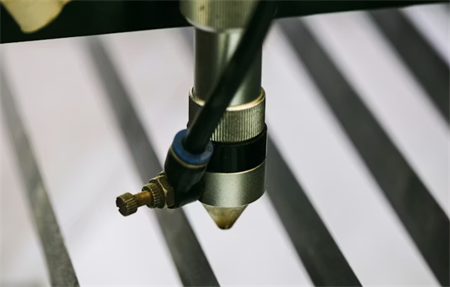
In most real-world cases, DataMatrix 10 x 10 is used in Direct Part Marking (DPM).
Instead of printing labels, the code is directly applied using:
• Laser marking
• Dot peening
• Chemical etching
The advantage is durability.The trade-off is that readability becomes much harder to control.
Readability Challenges (And How to Fix Them)
At this scale, generating the code is not the hard part—reading it reliably is.
Common issues include:
• Reflection on metal surfaces
• Low contrast after marking
• Insufficient module definition
Industry solutions:
• Industrial vision systems (not consumer scanners)
• Dome lighting to reduce reflections
• Optimized laser parameters for high contrast
These are typically validated under ISO DPM quality standards.
How to Generate a DataMatrix 10 x 10 Correctly
To successfully generate a 10 x 10 symbol:
1. Keep the data extremely short (6 digits or fewer recommended)
2. Use ECC 200 compliant encoding software
3. Validate symbol size before marking
4. Test readability under real conditions
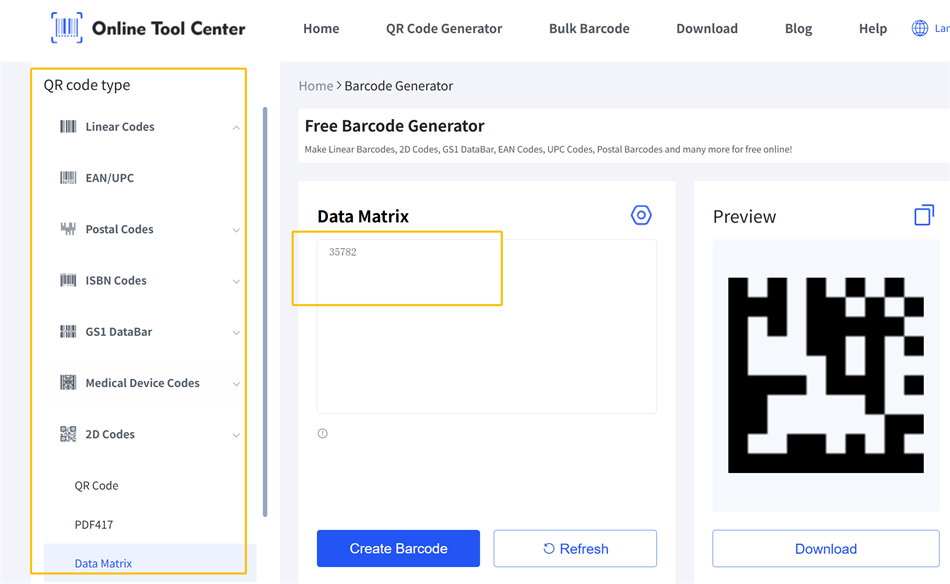
In practice, there are many free online 2D barcode generators that can quickly create a DataMatrix 10 x 10. The process is usually straightforward—simply enter your data and the tool will generate the symbol automatically.
Key rule:If your data does not naturally fit within the limit, do not force it—use a larger symbol instead.
Conclusion: When 10 x 10 Is the Right Choice
The DataMatrix 10 x 10 is not a general-purpose barcode, but a solution for extreme space constraints.
Used properly, it enables traceability on the smallest components. Used improperly, it often results in unreadable codes.
Ultimately, success depends less on generating the symbol—and more on designing the entire marking and scanning process around its limitations.
Common Questions About DataMatrix 10 x 10
Q1: What is the smallest DataMatrix size?
The smallest commonly used ECC 200 DataMatrix size is 10 x 10.
Q2: How much data can a 10 x 10 DataMatrix store?
Up to 6 numeric digits or 3 alphanumeric characters.
Q3: Can smartphones scan 10 x 10 codes?
Some smartphones can scan DataMatrix codes, but for 10 x 10 symbols—especially in DPM or low-contrast conditions—scan reliability is often limited.
