




Munich's Oktoberfest 2026 demonstrates how large-scale festivals can selectively adopt QR code technology to improve operations without discarding tradition. Rather than forcing a mandatory site-wide digital pass, organizers deployed QR codes to solve specific friction points in public transit access and historic paid-area entry.
Key Takeaways
• Main Festival Grounds: Entry remains 100% free; no general admission QR code or ticket is required.
• Oide Wiesn Area: Replaced legacy entry wristbands with scanned QR code tickets for 2026, paired with physical hand-stamps for re-entry.
• Transit Integration (MVG): QR codes at transport hubs route visitors directly to a browser-based ticket shop, eliminating app downloads and account registration.
• Organizer Lesson: Digital ticketing works best in a hybrid setup—combine instant QR validation at entry with simple physical fallbacks to prevent bottlenecks.
Do You Need a QR Code Ticket for Oktoberfest?
No. Admission to the main Oktoberfest grounds and regular beer tents is 100% free. You do not need a universal entry ticket or QR code pass to enter the festival.
While general entry requires no digital pass, rules vary across specific festival zones and transport services:
Zone / Service | Access Requirement | QR Code Role |
Main Festival Grounds | Free & open to the public | None: No ticket or QR code required. |
Beer Tents | Free entry (subject to tent capacity) | None: Table reservations are handled separately by individual tent hosts. |
Oide Wiesn (Historic Area) | Paid (about 4 euros for ages 15 and over; free for ages 14 and under, and free after 9 PM) | Primary Ticket: Scanned at gates to replace legacy wristbands. |
Munich Transit (MVG) | Standard transit fare | Direct Purchase Portal: Poster QR codes link directly to the web ticket shop. |
Essential Access Rules:
✔️ Main Grounds & Tents: Entry is always free. Tents close temporarily if overcrowded; a table reservation guarantees seat access, but is not a festival admission ticket.
✔️ Oide Wiesn Paid Area: The historic southern area requires a separate ticket costing 4 euros (online via Munich Ticket or on-site). This is the only zone using QR codes for gate access in 2026.
⚠️ Fraud Warning: Beware of third-party websites selling "Mandatory Oktoberfest QR Passes." There is no universal digital admission pass for Oktoberfest.
1. MVG Transit: App-Free, Web-to-Wallet Ticketing
Munich's public transport operator (MVG) uses QR codes at high-traffic hubs to eliminate friction for foreign tourists and occasional riders.
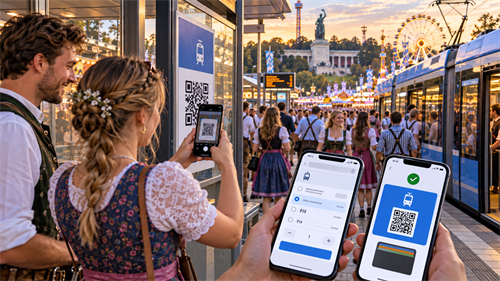
The Workflow:
1. Scan: Passenger scans an MVG poster QR code at a station or transit stop.
2. Select: Browser opens directly to ticket selection (no app download or account creation required).
3. Pay & Save: Purchase via Apple Pay or Google Pay and save the ticket directly to Apple/Google Wallet.
Organizer Takeaway:
Contextual QR codes placed at exact points of intent yield higher conversion than generic event homepage links. Bypassing mandatory app downloads and registration dramatically lowers drop-off rates.
2. Oide Wiesn: Hybrid QR Admission Workflow
The Oide Wiesn—the historic, heritage section on the southern Theresienwiese—adopted QR-code scanning in 2026 to replace legacy plastic/paper wristbands.
Workflow: [Online / On-site Purchase] ➔ [Receive QR Credential] ➔ [Gate Staff Scan] ➔ [Physical Hand-Stamp for Re-entry]
Why the Hybrid Model Works:
• First Entry Verification: Fast digital scanning via Munich Ticket infrastructure validates original passes and blocks duplicate redemptions.
• Offline Fallback: Once verified, staff apply a traditional physical hand-stamp for re-entry. This prevents gate chokepoints caused by drained phone batteries, screen glare, or overloaded cellular networks.
Core Lessons for Event Organizers
✔️ Deploy at Point-of-Need: Place QR codes exactly where action is required (e.g., entrance gates, transit hubs, table ordering) rather than on static promotional posters.
✔️ Build Hybrid Redundancies: Digital ticketing must feature a low-tech backup (stamps, physical tokens, offline lists) to manage device failures and network congestion.
✔️ Differentiate Static Codes from Enterprise Ticketing: A basic QR code generator is ideal for routing guests to schedules, maps, or feedback forms. However, gate access for paid events requires an enterprise ticketing platform equipped with real-time database validation and anti-passback controls.
✔️ Optimize for Speed: Eliminate sign-up forms and app installs. Direct users to light, mobile-optimized web views that support single-click wallet integration.
Frequently Asked Questions
Do you need a QR code to enter Oktoberfest 2026?
No. General admission to the main Oktoberfest grounds and beer tents is free and open to the public without any digital pass or entry ticket.
How are QR codes used at Oide Wiesn in 2026?
Oide Wiesn uses scanned QR codes instead of traditional admission wristbands for initial entry validation, paired with physical hand-stamps for re-entry.
How much does Oide Wiesn cost?
In 2026, admission is around 4 euros for visitors aged 15 and over. Entry is free after 9 p.m., and children up to age 14 can enter free of charge.
Where can visitors buy Oide Wiesn tickets?
Visitors can buy tickets on site and online through Munich Ticket. Check the official event information for the latest purchase locations and conditions.
Final Thoughts
Oktoberfest 2026 demonstrates that event digitization works best when applied selectively. By pairing frictionless QR code access with low-tech physical operational fallbacks, organizers maintain rapid crowd movement while preserving the classic festival experience.
If you are organizing a smaller event, begin with one clear use case. Create a QR code for your registration page, event guide, directions, or check-in instructions. Then print it with sufficient contrast, test it in real conditions, and prepare a backup process before guests arrive.
Ready to streamline your next event? Create a reliable, high-resolution QR code for free today!

