



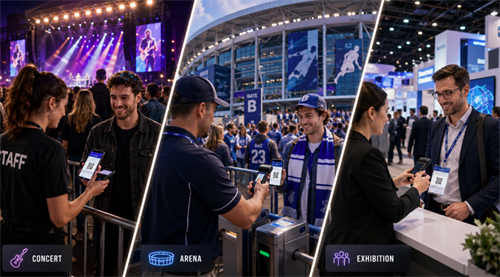
QR code ticket validation has become the default standard for modern event entry, from music concerts and sports arenas to large-scale business exhibitions. Paper tickets and manual checks are quickly disappearing. Most event systems now rely on mobile validation apps that verify QR codes instantly against live backend databases.
If you are searching for reliable QR code ticket validation apps for events, the landscape is not a single platform but a structured ecosystem built around different venue types and operational needs. This blog article breaks down how these systems work and highlight the platforms most commonly used in real-world event operations.
1.What QR Code Ticket Validation Actually Means
QR code ticket validation refers to a digital authentication process used to confirm access rights at an entry point.
• A QR code is presented by the attendee and scanned through a mobile validation app.
• The app checks the code's payload against a secure backend database that holds the active ticket records.
• The system determines whether the ticket is valid, active, duplicated, or expired.
In practice, the QR code does not contain the ticket itself. It serves as an encrypted pointer to a secure record stored elsewhere. Therefore, the scanning app acts as the secure decision layer at the gate.
Generate your event ticket QR code instantly with our free online QR code generator — start now!

2.How QR Code Ticket Validation Works (System Logic)
Although platforms differ, the underlying validation process remains largely consistent.
A typical flow includes:
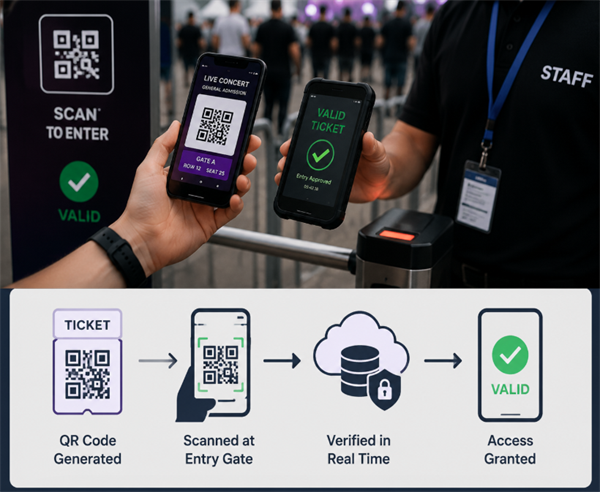
• A QR code is generated for a ticket
• The code is encrypted or tokenized
• The user presents it at the entry gate
• The app scans and decodes the token
• The backend system verifies validity in real time
• The system returns approval or rejection
The QR code functions purely as a digital trigger, while the actual validation decision is made entirely by the backend database infrastructure. This separation is what enables both scalability and fraud prevention in modern ticketing systems.
For example, the 2026 FIFA World Cup uses the official FWC2026 Mobile Tickets app with dynamic QR codes that only generate in-app hours before kickoff. This prevents screenshot fraud, as the gate scanners must validate the temporary token instantly against FIFA's secure backend database.
3.Top QR Code Ticket Validation Apps for Events
The event ecosystem does not revolve around a single app. It is divided into distinct functional categories based on usage scenarios—primarily enterprise closed-loop systems and open self-service applications.
The most familiar platforms used in concerts, sports venues, and exhibitions include:
• Ticketmaster App (SafeTix System) — An enterprise-grade platform utilizing dynamic, rotating QR codes for real-time ticket validation and anti-screenshot protection at high-traffic venues.
• Eventbrite Organizer App — A popular self-service B2B app that enables independent event hosts to scan and validate tickets via mobile devices with real-time attendee tracking.
• AXS Mobile ID App — A secure digital ticketing platform providing identity-linked validation with strong anti-fraud controls and secure offline scanning support.
• Ticket Tailor Entry Manager — A highly flexible, low-cost scanning app favored by independent festivals and community events for rapid multi-device synchronization.
These validation platforms are designed to manage:
✔️Frequently rotating QR codes (dynamic tokens)
✔️Real-time ticket status verification
✔️Anti-screenshot and fraud protection mechanisms
✔️Mobile entry pass delivery and group check-ins
Event environments demand strict control because traffic volume is high, gate entry windows are narrow, and fraud risk is constant.
4.What Makes a Good QR Code Ticket Validation App
Performance differences between systems usually come from architecture rather than interface design.
Several factors define quality in real-world deployments:
• validation speed under high traffic conditions
• offline or low-connectivity capability
• resistance to duplication and fraud attempts
• integration with ticketing and access systems
• clarity of scan feedback during failure scenarios
In most operational environments, reliability and speed matter more than feature complexity.
A system that works consistently under pressure is always preferred over one that is feature-rich but unstable.
5.Common Issues in QR Code Ticket Validation
Even well-designed systems face predictable challenges in real-world usage.
The most common issues include:
• expired or dynamically rotated QR tokens
• poor lighting or scanning angle during entry
• backend synchronization delays between systems
• use of screenshots or forwarded ticket images
• unstable mobile or network conditions at the gate
Most of these cases are not system failures in the strict sense. They are timing or environment mismatches between scanning and backend validation layers.
6.Future Trends in QR Code Ticket Validation
The QR code validation space continues to evolve as digital access systems expand across industries.
Several clear trends are emerging:
• AI-based fraud detection during ticket scanning
• dynamic QR codes with rotating encryption layers
• hybrid biometric and QR-based authentication systems
• stronger offline-first validation frameworks
• integration with digital identity wallets and unified access systems
QR validation is gradually shifting from simple scanning mechanisms toward full digital identity verification infrastructure.
Final Takeaway
The top apps for QR code ticket validation in events are not isolated products. They are part of a broader ecosystem that connects ticketing platforms, venue systems, and real-time verification networks.
At the core of these systems is a simple principle: a QR code does not represent the ticket itself. It represents a secure access trigger that is validated in real time by backend infrastructure.
As adoption expands, these apps are quietly becoming the invisible infrastructure behind modern events, mobility systems, and access control networks.
