



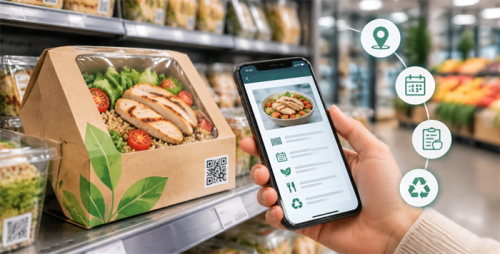
Food and beverage businesses need more than a product name and price to manage products safely and efficiently. GS1 Digital Link QR Codes can connect a product's identity with useful digital information, helping businesses improve traceability, manage freshness, and give consumers clearer product details.
What Is GS1 Digital Link for Food and Beverage?
GS1 Digital Link is a GS1 standard that connects product identifiers to online information about a product. When a GS1 Digital Link URI is encoded in a QR Code, the same code can support product identification in business systems and give shoppers access to relevant information online.
For food and beverage brands, this creates a practical way to connect packaging with information that may change by product, batch, or market—without filling the label with text.
What Information Can a GS1 Digital Link QR Code Carry?
A GS1 Digital Link QR Code can identify a product and carry relevant data, while linking users to more detailed information online:
• Product identification: a GTIN that identifies the trade item.
• Batch or lot number: data identifying the production batch.
• Date information: best-before or expiration dates.
• Weight information: net weight for variable-weight products, where applicable.
• Linked online content: ingredients, allergens, nutrition details, product origin, storage guidance, and recycling information.
The information depends on the product and its intended use. A fresh meal may need batch and date data, while a beverage brand may focus on product details and recycling guidance.
How Does GS1 Digital Link Help Food and Beverage Businesses?
1. Improve Food Traceability and Recall Readiness
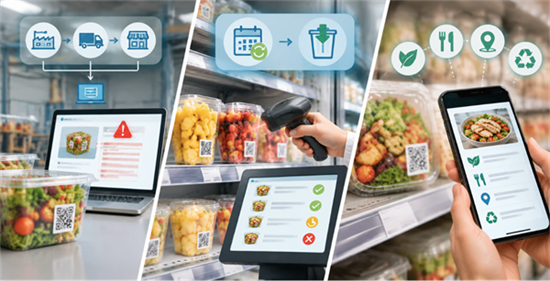
A GTIN identifies the trade item, while batch or lot information can help businesses narrow down which products may be affected by a quality or safety issue. When this information is captured as products move through production, distribution, and retail, teams can locate relevant batches more efficiently and support more targeted recalls.
A QR Code alone does not create end-to-end traceability. Businesses still need reliable records and systems to capture and share information across the supply chain.
2. Manage Expiration Dates and Reduce Food Waste
For fresh and short-shelf-life products, date information can help retailers monitor freshness, rotate stock, and identify items approaching their sell-by or use-by dates. When connected to inventory and point-of-sale systems, it can support actions such as markdowns or blocking products that are past their permitted sale date.
This helps businesses make better use of inventory and reduce avoidable waste instead of relying only on manual date checks.
3. Share Clearer Product Information with Consumers
A scan can take shoppers to online information that is difficult to fit on a small package, such as ingredients, allergens, nutrition details, sourcing information, recipes, or recycling instructions. This gives consumers a convenient way to learn more before or after purchase, while brands can keep digital content updated.
Real-World Example of GS1 Digital Link in Food and Beverage
Jau Serve, Brazil: Bakery Operations and Food Waste
Brazilian supermarket chain Jau Serve piloted QR Codes powered by GS1 in its bakery and confectionery operations. The codes combined product identification with batch and expiry data, helping store systems block expired products at checkout. According to the GS1 case study, the pilot improved productivity, reduced food waste and cut thermal printhead replacement costs by 30%.
How Can a Food or Beverage Business Get Started?
1. Start with product identification. Use a valid GS1 identification key, such as a GTIN, for the trade item.
2. Choose the data that supports your use case. Decide whether batch, date, weight, or other attributes are needed.
3. Create the GS1 Digital Link and QR Code. Follow the relevant GS1 specifications and make sure the code points to the right product information.
4. Connect and test your systems. Check that production, warehouse, retail, and point-of-sale systems can read and use the data. Test barcode print quality and scanning on the actual packaging.
Before replacing an existing UPC or EAN barcode, confirm requirements with retail partners. During the transition to 2D barcodes, a 1D barcode may still need to appear alongside the 2D code because not every point-of-sale system can process GS1 2D barcodes yet.
See the GS1 2D Barcodes at Retail POS Implementation Guideline.
Frequently Asked Questions
1. Can GS1 Digital Link QR Codes Track Food Products?
They can help identify products and batches and link to related records. Complete traceability still depends on businesses recording and sharing accurate data throughout the supply chain.
2. Can a GS1 QR Code Include an Expiration Date?
Yes. A GS1-compliant 2D barcode can carry relevant date information, such as a best-before or expiration date, when the product and use case require it.
3. Can Consumers Scan GS1 Digital Link QR Codes with a Smartphone?
Yes. A QR Code containing a GS1 Digital Link can be scanned by a smartphone camera to open related online product information, provided the URI and linked content are configured correctly.
4. Is GS1 Digital Link Required for Every Food Product?
No. Whether to use it depends on business needs, retailer requirements, and applicable regulations. Companies should confirm the requirements for their products and markets.
Make Product Information Easier to Access
GS1 Digital Link can help food and beverage businesses connect product identity with traceability, freshness, and consumer information. The best results come when the QR Code is supported by accurate data and connected business systems.
Create your QR Code with our GS1 Digital Link QR Code Generator using a valid GS1 Digital Link URI. Before printing, test the code with the systems that will scan it.
