



Key Takeaways:
• What it is: De-influencing is a digital consumer pushback where creators identify viral products that are overhyped, overpriced, or unnecessary, urging audiences toward intentional spending.
• The Hidden Paradox: Saying "don't buy this" builds rapid credibility. Research shows that de-influencing often primes consumers to trust the creator's subsequent recommendations.
• How to Shop Smarter: Follow five checks: need, evidence, value, commercial incentives, and existing alternatives.
Social media can make almost anything look like a must-have. One creator loves a skincare serum, another shows off a viral gadget, and soon it feels as if everyone owns it. De-influencing pushes back. Instead of telling people what to buy, creators point out products that may be overpriced, overhyped, unnecessary, or simply wrong for certain users.
At its best, de-influencing helps people pause, check the facts, and spend with more intention. But a negative recommendation can be just as persuasive—and just as commercially motivated—as a positive one. The trick is learning how to judge the advice, not blindly follow it.
What Is De-influencing and Why Is It Trending?
De-influencing is a social media phenomenon where creators publicly evaluate viral products to explain why they are overhyped, wasteful, or not worth buying.
De-influencing gained traction on TikTok in late 2022 and early 2023, partly as a response to the popularity of #TikTokMadeMeBuyIt. Its rise has coincided with growing concerns about overconsumption, tighter household budgets, and skepticism toward influencer marketing.
Gen Z and frequent TikTok users are often associated with the trend because short videos make it easy to share quick reviews and shopping advice. Still, de-influencing is not limited to one age group or platform. Anyone who questions hype before spending can apply the idea.
What Does De-influencing Look Like in Everyday Shopping?
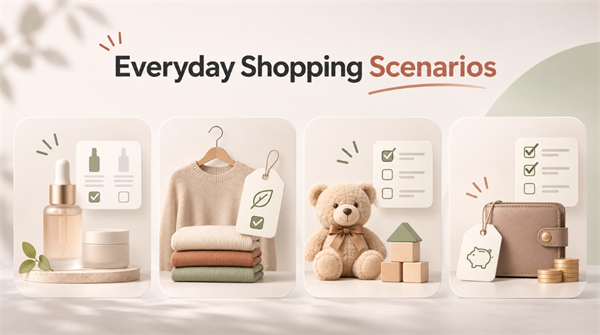
De-influencing becomes useful when it moves beyond "don't buy this" and explains what shoppers should consider instead. Here are four everyday examples.
Skincare and Beauty Products
A creator might question whether an expensive serum offers enough value for its price, or explain why a viral product did not suit their skin. A useful review gives context: skin type, ingredients, how long the product was used, and what results the creator actually observed. One person's experience is not proof that a product works—or fails—for everyone.
Fashion and Sustainable Shopping
A de-influencing video might challenge the habit of buying clothes for a single trend or occasion. Instead of judging a garment by its online popularity, consider its quality, versatility, expected lifespan, and cost per wear. Rewearing, repairing, borrowing, or buying secondhand may be better options than replacing a wardrobe every season.
Organizing a clothing swap or selling secondhand clothes?
You can add a QR code to item tags that links buyers to product details or an existing payment page. Try our free QR code generator to turn a URL into a scannable code.

Toys and Parenting
Parents can look beyond a toy's viral status and check whether it suits a child's age, interests, and abilities. Product safety information, age labels, small parts, durability, and play value matter more than how often a toy appears in unboxing videos. The best choice is the one that fits the child—not the trend.
Shopping on a Tight Budget
When money is limited, ask whether a purchase solves a real problem or simply creates a new want. Compare the total value, not just the discount. A lower-priced alternative may be enough; using something you already own may be better still. Waiting a day or two before buying can also help separate a genuine need from impulse.
Does De-influencing Really Work? Benefits, Risks, and Hidden Marketing
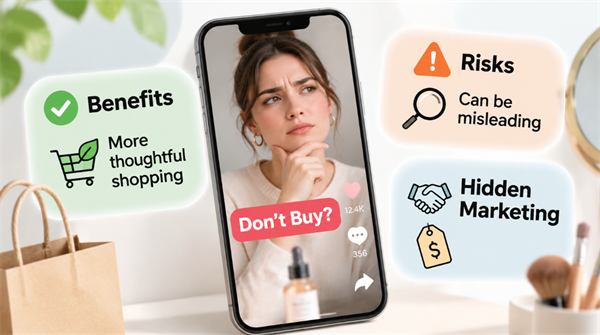
De-influencing can encourage more thoughtful shopping, but it does not automatically reduce consumption. Its impact depends on the quality of the advice and what viewers do next.
Can It Reduce Overconsumption?
It can prompt people to question viral "must-haves," compare alternatives, and avoid purchases they would later regret. It can also bring attention to product longevity, waste, and more sustainable choices. But telling viewers not to buy one expensive item and then urging them to buy three cheaper substitutes may simply redirect spending rather than reduce it.
A 2026 study based on interviews with 15 TikTok users found that participants associated de-influencing with authenticity, more informed choices, and consuming less. This offers useful insight into how some users understand the trend, but a small qualitative study does not prove that de-influencing reduces spending across the wider population.
Can De-influencing Be Misleading?
Yes. A creator may present a personal dislike as a universal fact, make claims without evidence, exaggerate a product's flaws for views, or criticize one brand mainly to promote another. Be cautious of sweeping statements such as "this never works" when the creator offers no testing details or reliable support.
How Do De-influencers Make Money?
De-influencers may earn through affiliate links to alternative products, sponsored posts, brand partnerships, platform monetization where available, or their own products and services. Earning money does not automatically make a review dishonest, but viewers should be able to identify relevant commercial relationships.
In the United States, the Federal Trade Commission says influencers should clearly disclose material connections—such as payment, free products, or other benefits—in a way audiences can notice and understand. A disclosure should not be hidden among hashtags or only on a profile page.
Research published in the Journal of the Academy of Marketing Science in 2026 adds an interesting twist: across a pilot study and four preregistered experiments involving 1,456 participants, de-influencing content increased perceived influencer trustworthiness and strengthened purchase intentions for products they later endorsed. In other words, saying "don't buy this" can sometimes make a creator's next recommendation more persuasive. That is a finding from experimental settings, not a guarantee about every creator or viewer.
Smaller creators can build credibility by focusing on products they know well, explaining how they reached a conclusion, showing both pros and cons, and being transparent about sponsorships and affiliate links.
De-influencing vs. Honest Reviews, Word of Mouth, No-buy Challenges, and Cancel Culture
These ideas can overlap, but they are not interchangeable.
Concept | How It Differs from De-influencing |
Honest Reviews | Evaluate a product's strengths and weaknesses based on actual experience. |
Word of Mouth | Shares personal recommendations between consumers, without necessarily questioning product hype. |
No-buy Challenge | Focuses on an individual's commitment to limit or pause non-essential purchases. |
Cancel Culture | Involves public criticism or social consequences for a person's or organization's actions. |
A review can be negative without being de-influencing. A no-buy challenge is something a person practices, while de-influencing is usually content shared with an audience. And a call to stop buying a product is not automatically cancel culture.
How to Use De-influencing to Make Smarter Buying Decisions
You do not have to agree with every de-influencer. Use their content as a prompt to check a purchase for yourself:
1. Identify your need. Would you still want the item if you had not seen it online?
2. Check the evidence. Does the creator explain their experience, testing, or reasons?
3. Evaluate the value. Consider quality, useful features, durability, and total cost—not hype alone.
4. Look at incentives. Check for sponsorships, gifted products, affiliate links, or other commercial ties.
5. Consider alternatives. Could a simpler option, a secondhand item, or something you already own meet the need?
De-influencing restores independent judgment over digital impulse. A viral product might genuinely suit your routine, while a heavily marketed trend may be entirely unnecessary. Spend based on personal utility, not online momentum.
Frequently Asked Questions
Is De-influencing the Same as Anti-consumerism?
No, de-influencing is a content tactic, while anti-consumerism is an overarching ideology. While anti-consumerism advocates for buying less overall, many de-influencing videos simply redirect spending from one viral brand to a cheaper "dupe" or affiliate alternative.
Can De-influencing Content Be Sponsored?
Yes. A creator may earn affiliate commissions by recommending alternatives, or have other commercial relationships that influence the content they publish. Under FTC guidance, material connections related to endorsements must be clearly and conspicuously disclosed.
Does De-influencing Mean You Should Stop Buying Popular Products?
No. Popularity alone does not make a product good or bad. Consider whether it meets your needs, fits your budget, and offers fair value. De-influencing is about making a deliberate choice—not automatically rejecting what is popular.
